DAO contributor crypto wallets are tools for receiving contributor payments, participating in governance and authorizing onchain actions, with the aim of keeping personal funds separate from DAO responsibilities. Choose by the authority your role requires: receiving a payment, casting a vote and approving treasury spending are different tasks, not interchangeable wallet features.
- Choose crypto wallets for DAO contributors by role: payments, governance and treasury signing require different controls.
- BuildAWallet HUMAN suits contributors planning a wallet blueprint; it does not deploy a working wallet.
- Separate personal funds from DAO duties, and verify network support before sharing a payment address.
- Keep balance-reading agents separate from signing authority; never put recovery secrets in prompts or logs.
Why wallet choice matters for DAO contributors
A decentralized autonomous organization, or DAO, coordinates activity through governance processes and sometimes shared onchain assets. Your wallet can become both a payment destination and a credential used to participate in that organization.
The complication is overlapping responsibility. You might receive compensation personally, vote using delegated authority and help approve treasury transactions. Use separate controls for separate responsibilities, even when one application supports all of them.
BuildAWallet offers a HUMAN blueprint design experience for planning those requirements. Treat the result as a specification to evaluate against working wallets, not as proof that accounts, recovery or security controls have been deployed.
Build your contributor wallet setup
Define each wallet's authority
Start with a written role map, using a document or spreadsheet. Record what each address receives, what it can authorize and which DAO processes depend on it. An address identifies an account; it does not explain who controls it.
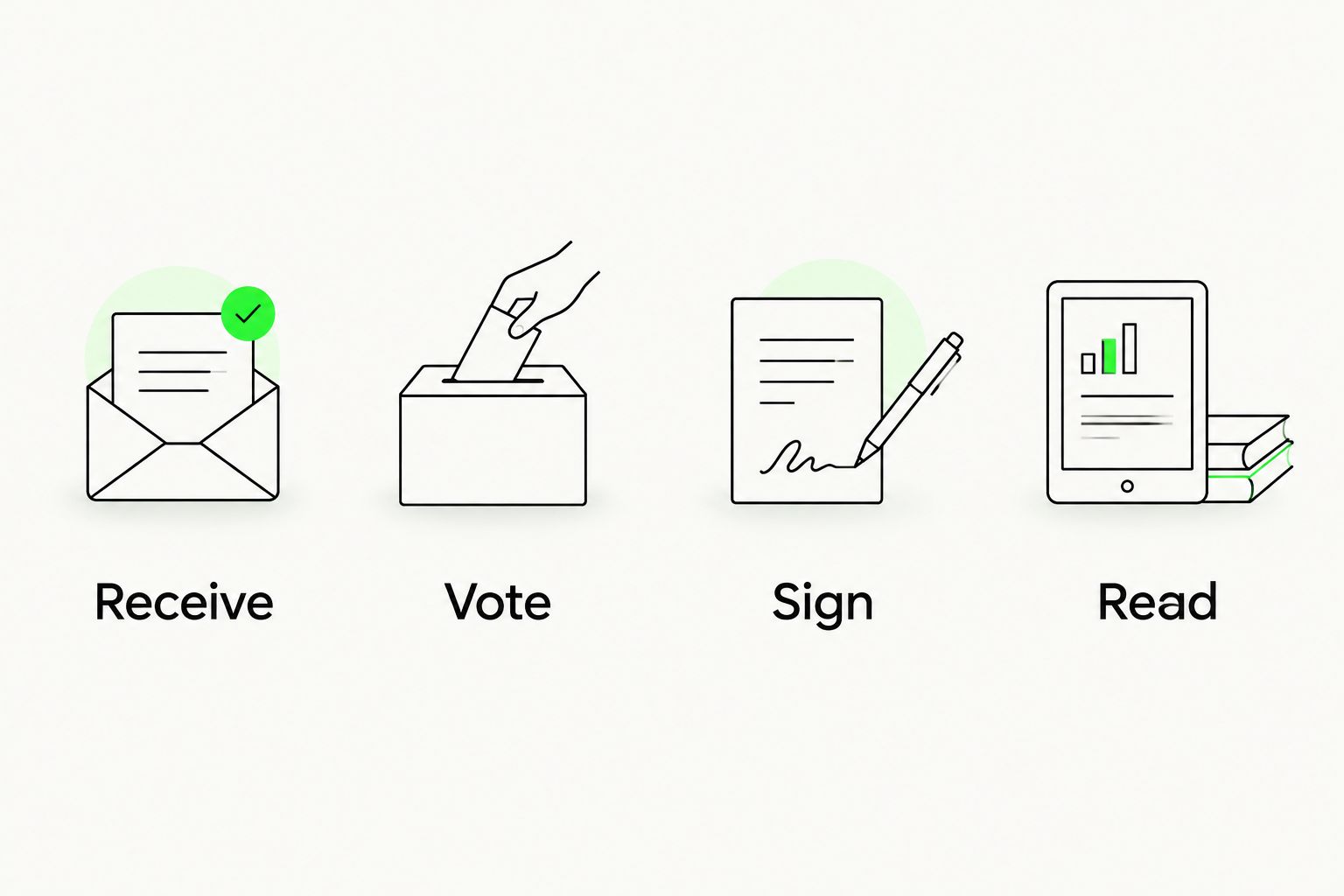
Distinguish these activities before choosing applications:
- Receive: Accept contributor payments at the agreed address and network.
- Vote: Participate through the DAO's actual governance process.
- Sign: Authorize transactions or messages within your assigned role.
- Read: Inspect balances without granting spending authority.
Some governance systems use transaction-based voting; others use signed messages or separate account permissions. Follow your DAO's process rather than assuming a token balance alone gives you the intended role.
A separate address is not a complete security boundary if the same compromised recovery secret controls it. Record whether accounts share recovery material, devices or administrators. This exposes dependencies that a list of addresses misses.
Verify the network and governance workflow
Ask the DAO for its payment network, asset identifier and governance instructions. Then check the candidate wallet's current official documentation against those requirements. A familiar asset name or address format is not enough.
A network is the blockchain environment where the account or asset exists. A token contract address or mint identifies a particular token within that environment. Confirm both instead of relying on a ticker symbol.
Use a non-custodial wallet comparison to organize candidates, then verify the actual workflow yourself. Non-custodial means you control the signing credentials; it does not establish compatibility with your DAO's voting interface.
A useful acceptance checklist includes:
- Confirm the exact payment network and asset identifier.
- Check how the DAO assigns voting or delegation rights.
- Verify support for the required governance interface.
- Identify the asset needed to pay transaction fees.
- Distinguish the payment recipient from any treasury signer address.
If a documented capability cannot be reproduced in your intended environment, stop at that boundary. Do not send contributor compensation to an address merely because the wallet displays a similar-looking network name.
Document custody and recovery before implementation
Write your recovery plan before a wallet becomes essential to your work. Custody describes who controls signing credentials; recovery describes how authorized access can be restored after loss or failure. Neither should depend on remembering an undocumented setup.
The manual approach is a private requirements document covering account ownership, recovery locations and replacement procedures. Keep the document free of actual recovery phrases and private keys. It should explain the process without becoming a credential repository.
BuildAWallet HUMAN is best for DAO contributors designing a wallet blueprint, not contributors seeking a deployed wallet. Use the guided design experience as an alternative to assembling that specification manually, then check every requirement against the implementation you select.
Include these decisions:
- Identify who controls each account and signing credential.
- Record recovery dependencies without recording the secrets themselves.
- Separate personal recovery arrangements from DAO succession procedures.
- Define what happens when a device is lost or replaced.
- Assign responsibility for updating addresses after an access change.
For treasury duties, coordinate recovery with the DAO's authorized process. Personal possession of a device does not establish organizational permission to replace a signer or change approval requirements.
Inspect signing requests before approving them
A signature proves authorization under a particular signing scheme, but its effect depends on what you sign. A transaction can change blockchain state; a signed message can also carry consequential permissions. A wallet connection is not a blanket reason to approve subsequent requests.
Open governance interfaces from a trusted reference maintained by the DAO. Compare the displayed request with the action you intended, and reject anything you cannot explain. If the interface hides critical details, use a verification path rather than guessing.
Hardware signing adds a separate device to the approval process, but it does not make an incomprehensible request safe. Check what the device actually displays and what the connected application asks you to authorize.
Before approval:
- Verify the requesting application and selected account.
- Check the network, destination and requested action.
- Read token permissions instead of treating approval as routine login.
- Confirm that treasury actions follow the DAO's approval process.
- Reject unexpected requests and ask for a clear explanation.
For example, an illustrative 2-of-3 approval arrangement requires two authorized approvals under its configured rules. That threshold does not establish whether the proposed recipient or transaction is legitimate; the signers still need to review it.
Validate contributor payments and preserve records
Agree on payment instructions before an invoice or distribution is finalized. Record the destination address, network and asset identifier in the channel your DAO uses to confirm contributor details. Address changes deserve a separate confirmation step, not an unnoticed edit in an old document.
After payment, compare the transaction with the agreed instructions. A transaction identifier is a useful reference, but a wallet notification alone does not establish that the expected asset arrived on the intended network.
For your records, preserve enough context to understand the payment later without exposing signing credentials. Tax treatment and reporting obligations depend on jurisdiction and personal circumstances; payment records support review but do not settle those questions.
Use this payment checklist:
- Confirm the destination through an agreed communication channel.
- Match the network and asset identifier to the payment agreement.
- Retain the transaction identifier and relevant invoice reference.
- Investigate discrepancies before reusing the payment instructions.
- Keep private keys and recovery material out of shared records.
Do not assume separating addresses creates anonymity. Public blockchain activity can expose relationships, and invoices or public contributor profiles can connect an address to your identity.
Separate automation from spending authority
Start manually by reading the relevant public balance and checking it against the account and network you intended. Introduce an automated reader only after the manual workflow is clear. A dashboard or agent that reports balances does not need the same authority as a treasury signer.
BuildAWallet NON-HUMAN is the machine-facing side for AI agents and the developers building them; HUMAN is a separate wallet-blueprint design experience. NON-HUMAN includes machine-facing access for Base and Solana balance reads, but deployment, RPC configuration and operation-specific availability require verification. RPC, or remote procedure call, is the mechanism software uses to request blockchain data from a node service.
The supplied homepage and documentation descriptions differ in scope. A broader documented endpoint catalog does not prove an operation works in a deployed service. Locally signed transaction preparation or broadcast is also distinct from provider-held autonomous signing; policy-controlled agent signing is described as unavailable or in development.
For a contributor-facing reporting tool:
- Verify current official documentation for the intended read operation.
- Confirm deployment and RPC requirements before implementation.
- Validate the returned account, network and asset context.
- Keep signing credentials outside prompts, logs and balance-reading code.
- Treat read failures as unknown balances, not zero balances.
- Require separate authorization for any transaction workflow.
Discoverability is not operational evidence. Finding a service description or machine-readable specification does not establish a successful request, a supported application integration or enforced spending controls.
Compare wallet approaches by contributor task
Choose the category before choosing a product. This comparison separates payment access, signing controls, shared authority, planning and automated observation; none replaces all the others.
| Option | Best for | Main advantage | Key limitation |
|---|---|---|---|
| Self-custody software wallet | Contributors receiving payments and using supported governance interfaces | Direct account access through software | Compatibility varies; compromised credentials can expose controlled accounts |
| Hardware signing setup | Contributors wanting a separate device for transaction approval | Separates key handling from the connected application | Requires compatible software and careful request review |
| Shared-control treasury account | Authorized contributors administering DAO funds together | Divides approval authority according to configured rules | Requires signer coordination and an agreed replacement process |
| BuildAWallet HUMAN blueprint | Contributors specifying custody, recovery and network requirements | Organizes design choices before implementation | A blueprint does not deploy an account or enforce controls |
| Read-only data workflow | Developers building contributor balance reporting | Observes account data without requiring spending authority | Does not authorize payments; availability and data context require validation |
Choose the smallest authority set that completes your task. A payment recipient does not automatically need treasury signing access, and a reporting agent does not need a recovery phrase.
Common mistakes DAO contributors make
Mixing compensation with treasury duties
Using one account for personal compensation and organizational approvals makes ownership and handover harder to explain. Separate the roles in your requirements, then verify that the chosen implementation provides the intended boundaries.
Assuming governance access follows a payment
Receiving a token does not establish every form of voting, delegation or proposal authority. Check the DAO's actual eligibility rules and verify the intended governance action before relying on the account.
Treating a blueprint as a deployed wallet
Choosing recovery preferences or a network in a design experience does not create working custody controls. Implementation requires a separate wallet setup and validation against the blueprint.
Giving reporting software signing secrets
A balance-reporting task is not a reason to supply private keys. Put access restrictions in application code and infrastructure controls; instructions in an agent prompt do not enforce a spending policy.
Leaving signer departure unresolved
A contributor's departure can affect shared approvals even when personal payment access remains intact. Define role removal, replacement and communication procedures before someone needs to leave urgently.
FAQ
What's the best crypto wallet for a DAO contributor?
The best wallet is the one that supports your assigned payment, governance or treasury task with no unnecessary authority. Verify network compatibility, recovery requirements and the actual governance workflow before choosing a working wallet.
Do I need a separate wallet for DAO work?
Separate accounts can help distinguish personal funds from DAO responsibilities. Check whether those accounts share recovery secrets or devices, because separate addresses alone do not create independent security boundaries.
Can I receive contributor payments with a hardware wallet?
A hardware signing setup can control a receiving account when the device and connected software support the required network and asset. Verify the payment details and recovery arrangement before sharing the address.
Does receiving DAO tokens let me vote?
Receiving DAO tokens does not automatically establish every governance permission. Eligibility can depend on the DAO's rules, delegation process and voting system, so verify the specific action you need to perform.
Does BuildAWallet HUMAN create a working DAO wallet?
BuildAWallet HUMAN provides a guided wallet-blueprint design experience, not a deployed wallet. You still need to select, configure and validate a working implementation against the design.
Can a balance-reading agent spend DAO funds?
Balance-reading access alone does not grant spending authority. Transaction signing requires separate credentials and authorization, and a documented signing-related endpoint does not prove autonomous signing is available.
What should I do when a DAO payment looks missing?
Check the transaction identifier, intended network, recipient address and asset identifier before concluding the payment failed. Treat a failed data request as an unknown result rather than evidence of a zero balance.
One last thing: test the departure process
A wallet setup is incomplete if nobody knows what happens when a contributor leaves. Before adopting your setup, write a short departure scenario: stop new payments, remove organizational permissions through the authorized process, replace signer access where required and preserve the records needed for handover.
Your next step is to create a role-and-authority document and validate one intended workflow against it. Start with receiving a payment or checking a balance; keep signing out of scope until its permissions and recovery process are explicit.