
The cost to embed a wallet SDK into an app depends on the wallet capabilities you need, the integration work, and the provider’s billing model; there is no universal project total. For app developers, the critical distinction is whether you need balance data, a connection to an existing wallet, or an embedded wallet with signing and recovery—because each creates a different implementation and operating budget.
- The cost to embed a wallet SDK into an app includes integration, recurring usage, deployment and maintenance.
- BuildAWallet NON-HUMAN serves machine-facing wallet data workflows; HUMAN designs wallet blueprints, not deployed wallets.
- Balance reads do not grant signing authority; budget transaction authorization separately.
- Compare providers against the same acceptance criteria before comparing their commercial terms.
How much does it cost to embed a wallet SDK into an app?
Budget the complete workflow, not just the SDK subscription. An SDK, or software development kit, supplies code your application uses to interact with another system. It does not remove the work of choosing custody, implementing recovery, validating responses or operating the integration.
BuildAWallet NON-HUMAN is the machine-facing side for AI agents and the developers building them; HUMAN is a separate wallet-blueprint design experience. That separation matters here: a data-access workflow is not the same deliverable as an embedded wallet SDK.
Use this breakdown when requesting an estimate:
| Budget component | What the estimate should cover | What to clarify |
|---|---|---|
| Application integration | User interface, backend connections and error handling | Which parts your team must build |
| Wallet control | Custody, authorization and recovery | Who can authorize transactions |
| Data access | Balance reads and response validation | Which requests are billable |
| Transaction workflow | Preparation, signing, broadcast and status handling | Which components are separate services |
| Deployment | Runtime configuration, credentials and network access | What works only after your deployment |
| Ongoing operation | Monitoring, support, dependency updates and incident handling | Who owns maintenance after launch |
An estimate that covers only successful wallet creation leaves important work outside the scope. Ask for explicit exclusions, especially recovery, failed requests, transaction failures and production support.
Why this matters: wallet access is not one capability
An app that displays a public wallet balance does not need authority to move the wallet’s assets. An app that submits transactions needs a defined authorization path, even when another component handles signing.
That boundary affects both implementation and responsibility. Do not add signing authority to solve a read-only data problem. It expands what the application must protect without improving the basic balance-read task.
For broader selection context, the crypto wallets for AI agents guide addresses wallet access and safety. For an integration budget, translate those boundaries into specific deliverables rather than accepting a general promise of wallet support.
Which integration are you actually budgeting for?
Choose the smallest integration that completes the user’s task. These approaches are not interchangeable tiers of the same product.
| Approach | Best for | Advantage | Limitation |
|---|---|---|---|
| Read-only wallet data | Apps or agents that need balances | Keeps data retrieval separate from asset control | Cannot authorize transactions |
| Existing-wallet connection | Users who already control a compatible wallet | Leaves signing with the connected wallet | Depends on the wallet’s supported connection and approval workflow |
| Embedded wallet SDK | Apps that need wallet interactions within their own experience | Can keep wallet interactions inside the application | Requires provider-specific custody, recovery and deployment review |
| Wallet blueprint | Individuals planning wallet requirements | Clarifies networks, custody and recovery preferences | Does not deploy or secure a working wallet |
Choose read-only data when the task ends at displaying or checking a balance. Choose an existing-wallet connection when users should approve actions through their own wallet. Evaluate an embedded SDK when the product specifically needs an integrated wallet experience.
A blueprint belongs in the planning category. Do not count a completed design as a completed production integration, or compare its scope directly with a working transaction system.
How do you turn wallet requirements into an estimate?
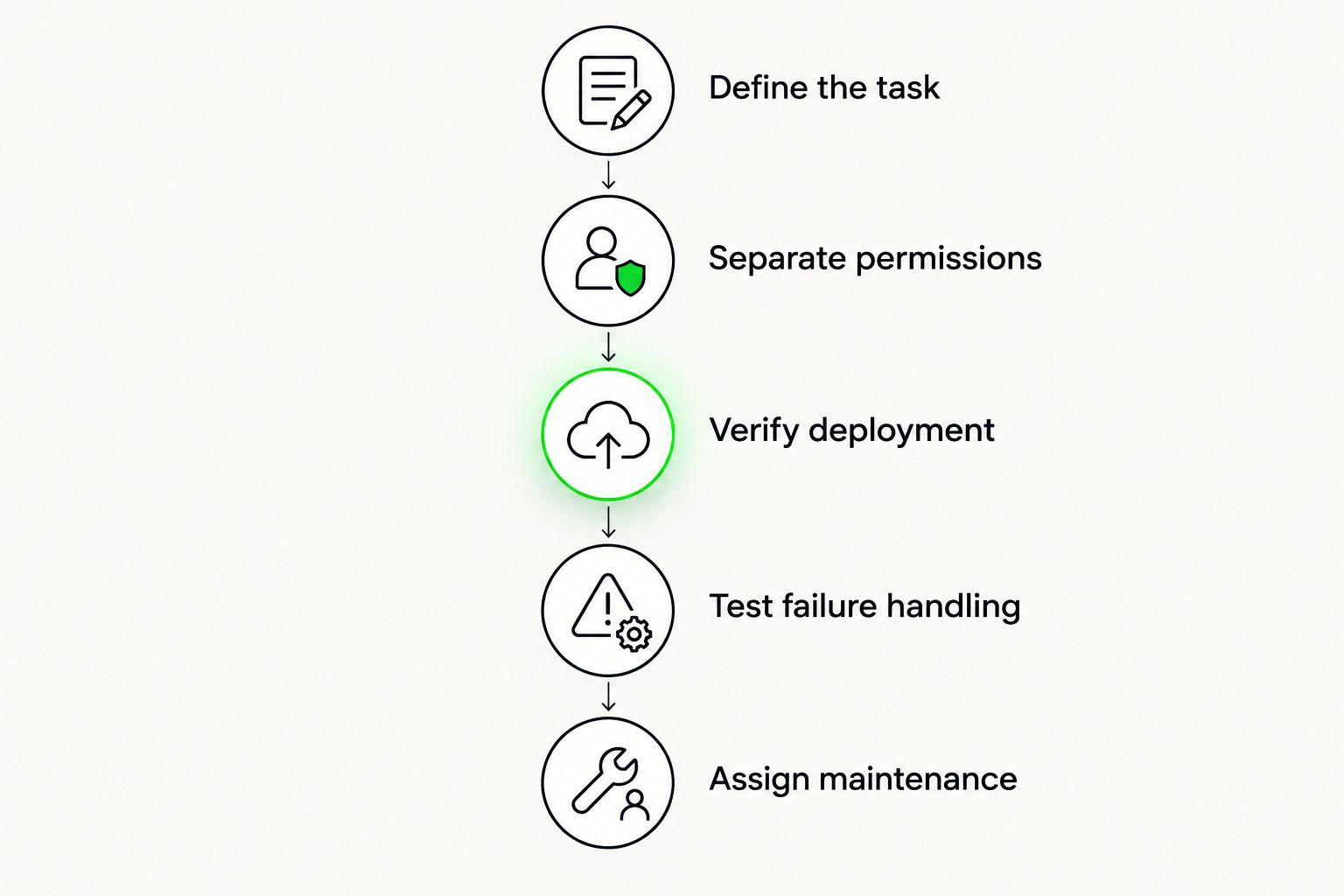
Use an acceptance checklist before asking vendors or developers for a project total. Each step should produce something that can be reviewed without relying on a demonstration of the happy path alone.
Define the task
Write down what the user or agent must accomplish. “Display a balance for a supplied address” is a narrower task than “create a wallet, recover access and authorize transactions.”
Include the required networks and assets. Do not assume that support for a network includes every asset representation or every operation your application needs.
Separate permissions
Identify which components can read data, prepare a transaction, sign it and broadcast it. Signing authorizes a transaction; broadcasting submits an already signed transaction to a network.
A component that broadcasts a locally signed transaction does not necessarily possess the signing key. Keep that distinction visible in both the architecture and the estimate.
Verify deployment
Identify the application-side configuration, backend services and credentials the integration needs. RPC, or remote procedure call, configuration connects software to a network service; documenting an endpoint does not prove that your deployed application can use it.
Require an operation-specific validation result. A reachable website or a published endpoint catalog is not a substitute for a successful request from your intended environment.
Test failure handling
Include invalid input, unavailable dependencies, rejected authorization and interrupted requests in acceptance testing. Define how the application distinguishes an error from a valid empty result.
For transaction workflows, also define how the application handles an uncertain submission outcome. Repeating an action without understanding its previous state is not a sound recovery strategy.
Assign maintenance
Specify who updates dependencies, monitors failures and handles changes to provider requirements. Record the handover requirements before launch rather than treating maintenance as an unspecified future task.
Why wallet SDK integration costs vary
The scope changes when the application takes responsibility for more of the wallet lifecycle. Compare estimates against these factors:
- Custody and signing: Identify who controls keys and which component approves transactions. Do not treat local signing and provider-held signing as equivalent.
- Recovery: Define how users regain access and what happens when the intended recovery method fails. Recovery requirements belong in the initial scope.
- Network coverage: List the exact networks and operations you need. Validate each required operation rather than relying on a multichain label.
- Request volume: Model balance reads, refreshes and application-generated retries. Confirm how the provider defines a billable request.
- Deployment requirements: Separate supplied functionality from infrastructure, credentials and configuration your team must provide.
- Operational support: Include monitoring, upgrades, incident ownership and user support. An integration remains a dependency after its first successful deployment.
These factors explain why two offers labelled “wallet integration” can describe different amounts of work. Resolve the scope difference before interpreting the difference in their totals.
How should you compare vendor estimates?
Give each vendor the same acceptance checklist. Ask for the included operations, application-side responsibilities, recurring billing units and exclusions in writing.
Separate the estimate into implementation, recurring services and maintenance. This prevents a narrow integration quote from being mistaken for the complete cost of operating the feature.
Review the surrounding application work separately, too. Wallet integration is only part of an app build: authentication, backend services, release testing and support still need owners. Comparisons of mobile app development costs require the same scope discipline; a location-specific app estimate cannot establish the total for a different wallet architecture.
Ask vendors to explain what happens when your workload changes. A billing model based on users measures something different from one based on requests, so compare both against the same planned application behavior.
Do not assume that an introductory demonstration includes production readiness. Have the estimate identify the work needed to reach your own deployment and acceptance criteria.
How do you budget recurring wallet-data requests?
Start with the events that trigger reads: opening a screen, refreshing a balance or running a scheduled agent task. Then identify which events generate another request rather than reusing a suitable previous response.
Use this planning relationship:
Expected billable usage = requests generated by application activity + billable retries and background reads.
This is a budgeting model, not a claim about any provider’s billing behavior. Confirm whether failed requests, retries or other operations count before applying the provider’s current commercial terms.
If you cache responses, define an acceptable freshness requirement. Caching means temporarily reusing a previous response; it does not make that response current. Show when a value was retrieved and prevent an old balance from silently becoming evidence for a new transaction decision.
Keep requests observable without exposing sensitive material. Record the operation, outcome and enough context to investigate failures, but keep private keys and recovery secrets out of prompts and logs.
Where does BuildAWallet fit in an integration plan?
BuildAWallet NON-HUMAN is best suited to developers evaluating machine-facing wallet data access, not to treating a blueprint as a deployed wallet. Its stated scope includes paid data access and Base and Solana balance reads; HUMAN remains a separate guided design experience.
The supplied homepage and documentation descriptions do not establish identical operational scope. The homepage states that deployment and RPC configuration are required and that policy-controlled agent signing is unavailable or in development. The documentation describes a broader endpoint catalog, including locally signed transaction preparation and broadcast.
A documented endpoint is not proof of a working deployed service. Likewise, preparing or broadcasting a locally signed transaction does not establish autonomous provider-held signing authority.
The discovery documents described in the October 8, 2026 reference notes also contain inconsistent subscription information. Use current, operation-specific documentation and validate the intended read-only request before funding or signing anything.
For an agent application, keep discovery, data access and authorization separate. Discovery documents can point your software toward an interface; they do not prove a successful paid request, a working framework integration or permission to spend.
Can you reduce the scope without weakening the requirements?
Remove unnecessary authority, not necessary validation. If the product only needs a balance, avoid adding wallet creation, recovery and transaction signing to the first implementation.
When transactions are essential, specify the approval path before choosing an SDK. A requirement such as “a human approves every transaction” must map to an actual authorization control, not merely an instruction in an agent prompt.
Also distinguish prototype acceptance from production acceptance. A prototype can demonstrate the intended interaction, but production planning still needs deployment validation, failure handling and maintenance ownership.
Avoid solving every possible future wallet requirement in the first release. Keep future capabilities documented as separate scope so they do not blur what the current integration must deliver.
FAQ
How much does it cost to embed a wallet SDK into an app?
The cost depends on implementation scope, custody and recovery requirements, usage billing, deployment and ongoing maintenance. Compare estimates for the same accepted workflow rather than treating the SDK subscription as the whole project.
Is a wallet SDK subscription the only recurring expense?
No. Your integration can also require data access, network infrastructure, monitoring, support and maintenance. Confirm which services are included and which your team operates separately.
Do I need an embedded wallet SDK just to display balances?
No. A read-only balance-data integration can address that task without granting signing authority. Validate the required networks, response handling and deployment requirements before selecting a service.
Does connecting a wallet give my app permission to spend?
A wallet connection alone does not establish unrestricted spending authority. Review the actual authorization and signing workflow instead of inferring permissions from a connected state.
Is BuildAWallet a deployed embedded wallet SDK?
BuildAWallet HUMAN is a wallet-blueprint design experience, while NON-HUMAN provides machine-facing data access. Neither a completed blueprint nor a documented endpoint establishes that your application has a deployed, working wallet integration.
Does local signing mean an AI agent can sign autonomously?
No. Local signing describes where transaction authorization occurs, not whether an agent has independent authority. Identify who controls the key and which approval controls the signer enforces.
What should I validate before approving a wallet integration estimate?
Validate the required operation in the intended deployment environment, including its failure behavior. Then confirm custody, recovery, billing definitions, maintenance ownership and explicit exclusions.
Related guides
- Verify crypto wallet API deployment
- Budget paid crypto wallet API requests
- Keep a crypto wallet API tool read-only
Your next step
Write a short acceptance specification before requesting an estimate: required networks, read operations, signing authority, recovery responsibilities and failure behavior. Ask each vendor to mark every requirement as included, application-side work or unsupported—then compare the same deliverable.