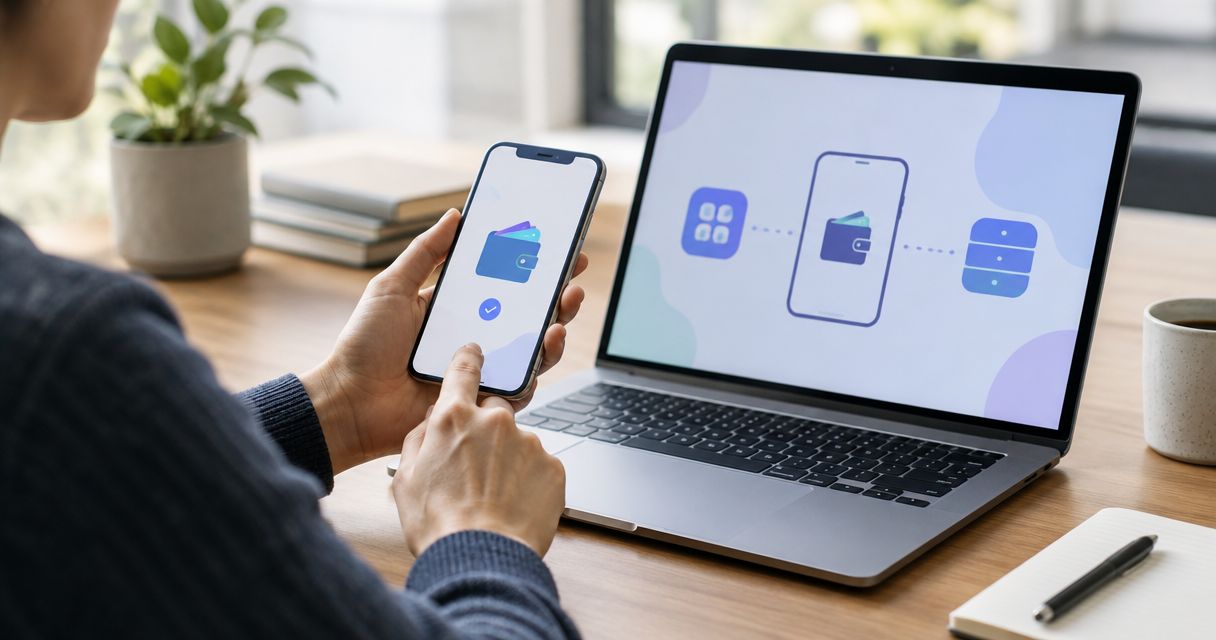
Yes—an autonomous agent can pay for its own API calls with crypto when the API accepts a compatible payment method and a separately authorized signer can approve the payment. Payment authority, network fees where applicable, and access to the requested data are separate requirements; a wallet balance reader alone cannot authorize spending.
- An agent can pay for API calls with crypto only when payment acceptance and signing authority are configured separately.
- BuildAWallet NON-HUMAN targets paid wallet-data access; balance reads do not grant spending authority.
- Enforce payment limits outside the agent prompt, and reject payment requests that fail validation.
- Verify deployment, payment handling, and the intended read operation before enabling unattended requests.
Can an autonomous agent pay for its own API calls with crypto?
Yes, but the application must connect a payable API request to an authorized payment workflow. The agent can decide that it needs data; a separate control should decide whether it is allowed to spend funds obtaining that data.
BuildAWallet NON-HUMAN is the machine-facing side for AI agents and the developers building them; HUMAN is a separate wallet-blueprint design experience. The distinction matters: designing a wallet does not deploy it, and reading a balance does not create a transaction signer. The crypto wallets for AI agents guide provides the broader access-and-authority context.
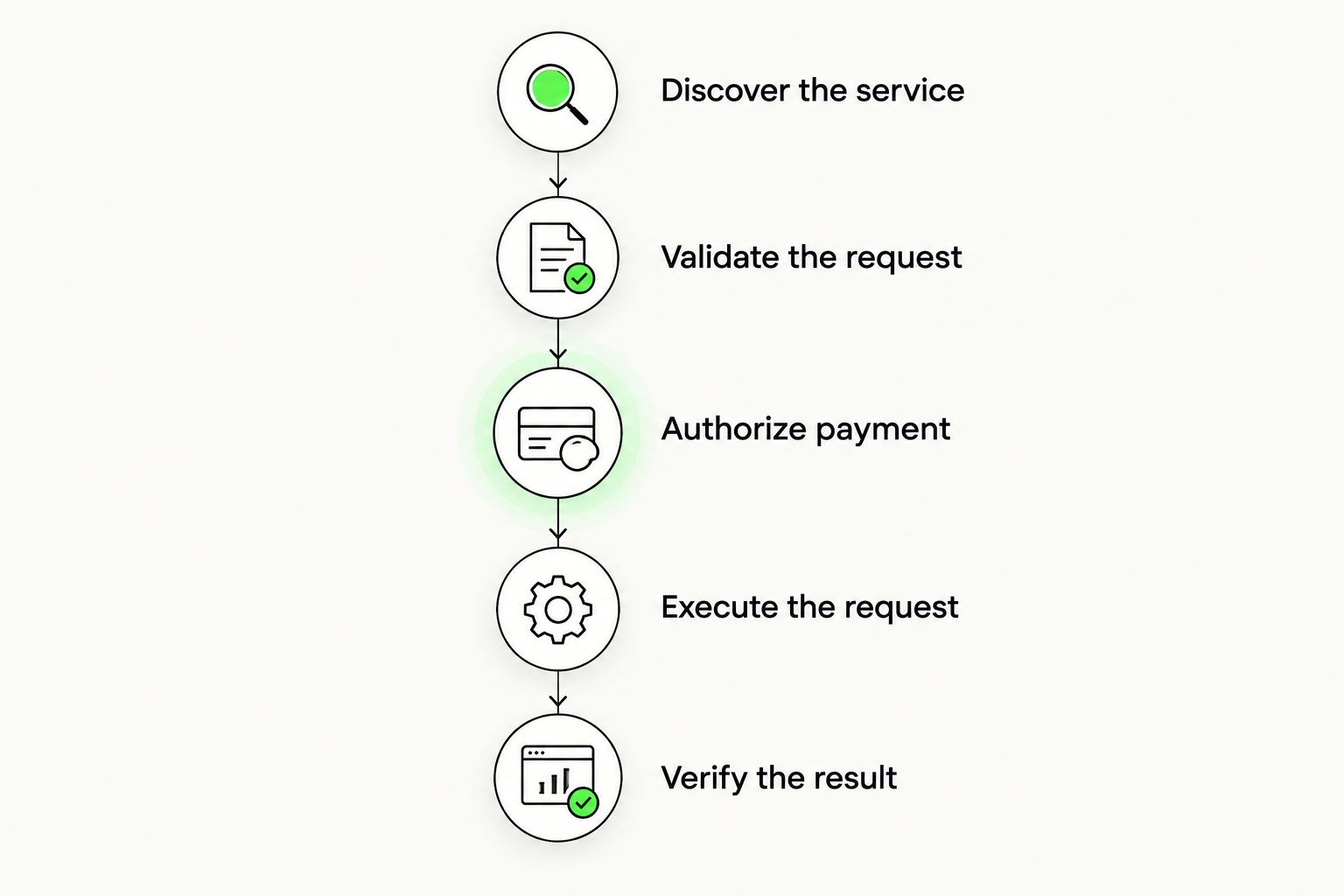
A practical implementation separates the request into these stages:
- Discover the service. Locate the provider's official documentation and identify the intended operation.
- Validate the request. Confirm the endpoint, network, wallet address, payment destination, and applicable payment terms.
- Authorize payment. Apply spending controls in code or another enforcement layer outside the model.
- Execute the request. Follow the provider's documented payment and request sequence using a separately authorized signer.
- Verify the result. Check payment status and validate the returned data before the agent uses it.
These are application-design stages, not a claim that any particular provider implements this sequence or exposes corresponding endpoints.
Why this matters: paying for data is still spending
A balance-query tool can be read-only with respect to the wallet it observes while its surrounding workflow spends funds to obtain that data. Those permissions are different. Your application needs to control both.
For example, an agent might request a Solana balance before producing a report. The public address identifies the wallet being observed; it does not authorize payment from that wallet. A separate payment account and signer can serve the request without giving the agent authority over the observed assets.
Treat paid data access as a spending workflow, even when the underlying API operation only reads information. This keeps the payment budget separate from the agent's ability to inspect wallet data.
Which payment architecture fits your agent?
Choose an architecture by deciding who authorizes spending, where keys remain, and what happens when a request becomes ambiguous. Do not select a system solely because it describes itself as an agent wallet.
| Architecture | Best for | Benefit | Limitation |
|---|---|---|---|
| Human-approved payments | Initial validation and exceptional requests | A person reviews the intended payment before authorization | Human review interrupts unattended operation |
| Application-controlled local signing | Automated requests with application-enforced limits | Your application checks policy before using its signer | Your application must protect keys and implement reliable controls |
| Provider-held agent signing | Workflows requiring delegated execution, if explicitly supported | Delegation can move execution outside your application | Requires verified availability, defined authority, and trust in the provider's controls |
These are design options, not verified features of a named vendor. Local signing means a key in your controlled environment authorizes the payment; provider-held signing means another service controls the signing capability.
Start with human approval for validation, then automate only the requests your enforcement layer can evaluate. If the provider's signing model or payment behavior remains unclear, keep that request outside unattended execution.
What can BuildAWallet contribute to this workflow?
BuildAWallet NON-HUMAN is best suited to developers evaluating paid Base and Solana balance-data access, not developers seeking verified autonomous signing. Its relevant role is supplying machine-facing wallet data. HUMAN belongs in a separate wallet-design category.
The supplied brand documentation notes, dated October 8, 2026, identify material availability limits:
- The homepage states that deployment and RPC configuration are required. RPC means remote procedure call: the interface used to communicate with a blockchain node.
- Policy-controlled agent signing is described as unavailable or in development.
- Documentation describes a broader endpoint catalog, including locally signed transaction preparation and broadcast workflows.
- Discovery documents describe a broader offering than the homepage, with inconsistent subscription pricing.
A documented endpoint is not evidence that a deployed service can complete your request. Likewise, transaction broadcast—the submission of a signed transaction—does not establish that a provider can autonomously authorize it.
For discovery, inspect the current NON-HUMAN overview, machine documentation, llms.txt, agent manifest, and OpenAPI specification before relying on their contents. These documents help locate and describe operations; they do not prove successful payment, deployment, or signing. Validate the intended read operation separately before funding or signing anything.
How do you validate a paid API request?
Establish the operation before attaching payment
Write down the exact read your application needs: the network, wallet address, balance type, and response fields. Keep the task narrow. A successful native-asset balance read does not validate token balances, another network, or transaction execution.
Confirm the provider's current deployment requirements and payment instructions from official documentation. Do not infer an authentication method, payment sequence, or supported asset from an example for a different operation.
Bind authorization to the intended payment
Your payment control should evaluate the intended recipient, network, asset, amount, and request purpose before a signer acts. This is an application-side recommendation, not a claim about provider-enforced policy.
Do not let a model-generated explanation substitute for those checks. If the destination or terms differ from the approved request, stop and require fresh authorization rather than treating the change as harmless.
Keep secrets outside the agent context
Store private keys and recovery secrets outside prompts and logs. Pass the agent only the information needed to request an allowed action and interpret its result.
A prompt saying not to overspend is an instruction, not an enforced spending limit. The component controlling the signer must reject disallowed payments even if the agent requests them confidently or repeatedly.
Validate payment and data independently
Check payment status using the provider's documented mechanism, then validate the response against the expected operation. Neither check replaces the other.
For balance data, confirm the requested address, network, asset identifier where relevant, and units. Where the response includes timestamps or block references, use them to evaluate freshness; do not assume those fields exist or that a successful response guarantees current data.
Why autonomous payment behavior varies
Whether an agent can complete the workflow depends on the operation and deployment, not just the presence of a wallet address.
- Payment acceptance: The API must explicitly support the payment method your application intends to use.
- Signing authority: A balance reader cannot sign; a separate signer must have permission to authorize the payment.
- Deployment readiness: Required services and RPC configuration must be operational for the intended request.
- Policy enforcement: Limits must exist in an enforcement layer, rather than solely in agent instructions.
- Failure semantics: Your application needs documented ways to distinguish failed payment, unsettled payment, and failed data delivery.
- Documentation agreement: Conflicting descriptions require operation-specific validation instead of reliance on the broadest feature claim.
Keep these dependencies in your acceptance checklist. A successful balance response validates that read under those conditions; it does not validate every endpoint or authorize broader spending.
What should happen when payment succeeds but the request fails?
Do not automatically pay again. A timeout does not tell your application whether the provider received payment, completed the operation, or returned a response that your client missed.
Keep separate records for the logical data request, payment attempt, and response outcome. Record non-secret references that let you reconcile them, while excluding private keys, recovery material, and sensitive credentials.
Before retrying, check whether the provider supports payment-status lookup, request reconciliation, or idempotency. Idempotency is a mechanism for handling repeated attempts without repeating the intended effect; do not assume a provider supports it or applies it to payments.
Use this failure-handling checklist:
- Payment rejected: Stop the paid request and inspect the documented failure reason.
- Payment status unknown: Reconcile the existing attempt before authorizing another payment.
- Payment accepted, data absent: Follow the provider's documented recovery process; do not invent a refund or retry guarantee.
- Data returned, validation failed: Reject the response as unusable and record the mismatch.
- Documentation unclear: Escalate to human review rather than allowing repeated unattended attempts.
The guide to retrying paid crypto wallet API requests addresses this separate retry-design task.
Does a read-only agent need a payment signer?
A read-only agent needs a separate payment signer if obtaining its data requires a crypto payment that has not already been authorized through another supported arrangement. Read-only describes access to the observed wallet, not every action performed by the application.
Keep the data tool narrow. A balance tool should return validated balance information, not silently gain transaction authority because the application also needs to pay a provider.
Can locally signed payments run without human approval?
Locally signed payments can run without per-request human approval when an application has authorization and enforces its payment rules outside the model. Local signing alone does not establish that those rules exist or that the provider supports the intended payment workflow.
Test authorization failures as well as successful requests. A signer that refuses an unapproved destination is more useful evidence of a control than a prompt that asks the agent to be careful.
FAQ
Can an AI agent pay for an API call with crypto?
Yes, when the API accepts a compatible payment method and a separately authorized signer can approve payment. A wallet balance endpoint alone does not provide spending authority.
Does reading a wallet balance give an agent access to the funds?
No, reading a wallet balance does not grant signing authority over the wallet. Paying for that read is a separate workflow that needs its own authorization.
Does BuildAWallet NON-HUMAN provide autonomous agent signing?
The supplied brand notes describe policy-controlled agent signing as unavailable or in development. They also describe locally signed transaction workflows, which are distinct from autonomous provider-held signing; verify current operation-specific availability.
Can I enforce an agent's payment budget in its prompt?
A prompt is not an enforced payment budget. Apply limits in the application or another control layer that can refuse authorization regardless of the agent's instructions.
Should an agent retry payment after an API timeout?
An agent should reconcile the existing payment attempt before paying again. A timeout does not establish that the original payment failed, and provider retry behavior must be verified.
Does an OpenAPI specification prove that paid requests work?
No, an OpenAPI specification describes an interface; it does not prove successful deployment, payment, or data delivery. Validate the exact operation and its prerequisites separately.
Do crypto payments guarantee private API access?
No, crypto payments do not guarantee privacy. Review what wallet identifiers, payment records, request metadata, and logs the workflow exposes; this is general security education, not a privacy guarantee.
One last thing: test refusal before autonomy
A successful paid request proves less than a correctly rejected unauthorized request. Before enabling unattended execution, confirm that your application stops when the destination changes, authorization is missing, or an earlier payment remains unresolved.
Those checks test your application boundary, not a claimed provider guarantee. Keep the agent unable to bypass that boundary by changing its prompt or choosing a different tool.
Related guides
- Verify crypto wallet API deployment
- Keep a crypto wallet API tool read-only
- Handle crypto wallet API payment failures
Next step: select the intended read-only operation, verify its current deployment and payment requirements, and validate it with human approval before connecting unattended signing.